



For generations, success in farming was measured by one thing.
How much you could grow.
Bigger harvest.
Better yield.
More production.
That was the goal.
And for a long time, it made sense.
Because farming was primarily about producing food.
But something has changed.
The farmers creating the biggest opportunities today are not always the ones producing the most.
They’re often the ones creating the most value.
And there is a difference.
A significant difference.
Because the future of farming is no longer just agriculture.
It’s entrepreneurship.
Let’s be honest.
Growing crops has become harder.
Input costs continue to rise.
Weather patterns are becoming less predictable.
Market prices fluctuate constantly.
Profit margins are often squeezed from every direction.
In this environment, simply producing more isn’t always the answer.
In fact, producing more can sometimes create a bigger problem if market prices fall at the same time.
That’s the trap many farmers find themselves in.
They work harder.
They produce more.
Yet their income barely changes.
Why?
Because production alone doesn’t control profitability.
Value creation does.
Imagine two farmers growing the exact same crop.
The first farmer harvests and sells raw produce immediately.
The second farmer packages it, processes it, creates a brand around it, and sells directly to consumers or retailers.
Both grew the same crop.
But they’re operating in completely different businesses.
One sells commodities.
The other sells value.
And value almost always commands a higher price.
This is why agri entrepreneurship is becoming one of the most important trends in modern agriculture.
The most successful farmers of the next decade may not describe themselves only as farmers.
They may describe themselves as entrepreneurs who happen to work in agriculture.
That’s a completely different mindset.
An entrepreneur doesn’t just ask:
“How can I grow more?”
They ask:
“How can I create more value?”
That single question changes everything.
Instead of selling tomatoes, perhaps they create tomato-based products.
Instead of selling raw spices, perhaps they package and brand them.
Instead of selling milk, perhaps they create specialty dairy products.
Instead of selling crops to middlemen, perhaps they build direct-to-consumer channels.
The crop remains important.
But the business expands beyond the crop.
And that’s where opportunity begins.
Think about some of the world’s most successful food businesses.
Most of them don’t make their largest profits from raw agricultural products.
They make profits from processing, branding, packaging, distribution, convenience, and customer relationships.
In other words, they make money from what happens after the farm.
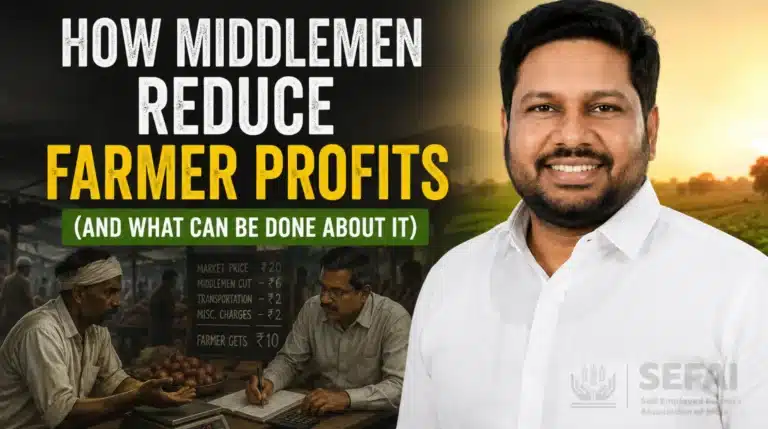
The uncomfortable truth is that many farmers have traditionally participated in only the first stage of the value chain.
They do the hardest work.
They take the greatest risks.
Yet much of the profit gets captured further down the chain.
Entrepreneurship changes that equation.
It allows farmers to participate in more stages of the process.
And the more value they create, the more value they can retain.
This is where rural business ideas become incredibly important.
Because entrepreneurship in agriculture doesn’t always require massive factories or enormous investments.
Sometimes it begins with a simple shift in perspective.
A farmer notices a market gap.
A local need.
A niche demand.
An opportunity to solve a problem.
And from that observation, a business is born.
Maybe it’s food processing.
Maybe it’s organic products.
Maybe it’s seed production.
Maybe it’s farm tourism.
Maybe it’s agricultural consulting.
Maybe it’s logistics.
Maybe it’s value-added products.
The opportunities are often much larger than people realize.
The challenge is that many farmers have been taught how to farm.
Very few have been taught how to think like entrepreneurs.
School systems rarely teach it.
Agricultural training often focuses on production.
Family traditions prioritize cultivation.
Business thinking is often treated as something separate from farming.
But increasingly, the two are becoming inseparable.
Because agriculture itself is evolving.
The farmer of tomorrow will need more than farming knowledge.
They’ll need branding knowledge.
Market knowledge.
Financial literacy.
Customer understanding.
Business strategy.
Not because farming skills matter less.
But because business skills now determine how much value those farming skills can generate.
This is also why agricultural startups are attracting so much attention.
Startups are not succeeding because they discovered a new way to grow crops.
Many succeed because they discovered new ways to solve agricultural problems.
New ways to connect farmers with markets.
New ways to improve supply chains.
New ways to process products.
New ways to create value.
At its core, entrepreneurship is simply problem-solving.
And agriculture has no shortage of problems waiting to be solved.
Which means agriculture has no shortage of business opportunities waiting to be built.
This is where organizations like SEFAI can play a transformative role.
Many farmers don’t need someone to tell them how hard agriculture is.
They already know.
What they need is support in identifying opportunities beyond traditional farming.
Access to knowledge.
Access to markets.
Access to business guidance.
Access to networks that help them think bigger than the next harvest.
Because the future belongs to farmers who understand that a crop is not always the final product.
Sometimes it’s the starting point.
The next generation of successful farmers won’t simply sell what they grow.
They’ll build brands around it.
They’ll create products from it.
They’ll process it.
Market it.
Package it.
Distribute it.
And build businesses that extend far beyond the farm gate.
The future of farming is not about abandoning agriculture.
It’s about expanding what agriculture can become.
And the farmers who embrace that shift won’t just grow crops.
They’ll grow enterprises.
And that’s where the next era of rural prosperity will be built.